

One of the main reasons most marketing projects fail, and other projects too, is a simple reason. An embarrassingly simple one. It’s because nobody defined what success looks like before the work started. Or said differently, no one defined the scope.
You’ve seen it happen. Projects that should take six weeks stretch to six months. Stakeholders keep asking “Is this done yet?” and you can’t give them a straight answer. Work gets rejected at the last minute by someone who should have been consulted on day one.
The problem is that you skipped two critical steps before anyone started working, which are locking down the scope and clarifying who actually has decision-making power (RACI).
Most marketing project management focuses on tracking tasks after work starts. That’s backwards. The best way to prevent delays is to lock down two things before anyone starts working: scope and ownership.
Table of Contents
Why Marketing Projects Fail Without These Guardrails
Here’s what happens when you don’t have these guardrails in place: without clear boundaries, every project expands. Your project board shows 17 items “In Progress”, but nothing actually ships. Your team works nights and weekends, but you can’t point to a single completed deliverable.
Stakeholders keep asking, “Is this done yet?” and you honestly don’t know how to answer because nobody ever defined what “done” means.
The problem isn’t that your team is slow. The problem is that you’re confusing activity with progress. Everyone’s busy, but without a clear scope and defined ownership, being ‘busy’ just means burning time on work that might get thrown out anyway.
This is why the Scope Document and RACI matrix I am introducing aren’t administrative paperwork; they’re your defense against wasted months.
The Two Marketing Project Templates You Need
Template 1: The Scope Document
The Scope Document is your permission to say no.
Without it, every project expands. A website becomes a website, a blog, a content strategy, and an email template redesign. Why? Because when someone senior says, “Shouldn’t we also…” and you don’t have a written scope to point to, then you say yes. Which you have to.
If you do not set up guardrails, it’s easy to have projects evolve as you go and have more items added to the deliverable, and as a result, your project turns out to be 4 projects instead of 1.
Here’s how scope creep actually kills projects.
Your marketing team starts off with a website project of 14 pages with a timeline of 8 weeks and your budget is locked.
Two weeks in, a senior VP casually mentioned, “You know, our new marketing push is all about content. Shouldn’t we include blog pages in this website project? Maybe write a few posts to get started?”
Without a Scope Document, the marketing director said yes. Now the project includes blog page design, four initial blog posts, and content creation added to the role of someone who’s already at capacity.
One project just became four. Timeline? Blown. Budget? Exceeded. Team morale? Crushed.
The Scope Document prevents this. It defines exactly what you’re building, what you’re explicitly NOT building, and when you’ll know you’re done. Write down what’s in scope and what’s out of scope before anyone starts working.
If you do not know what your scope is, you will never know when the project is done.
Template 2: The RACI Matrix
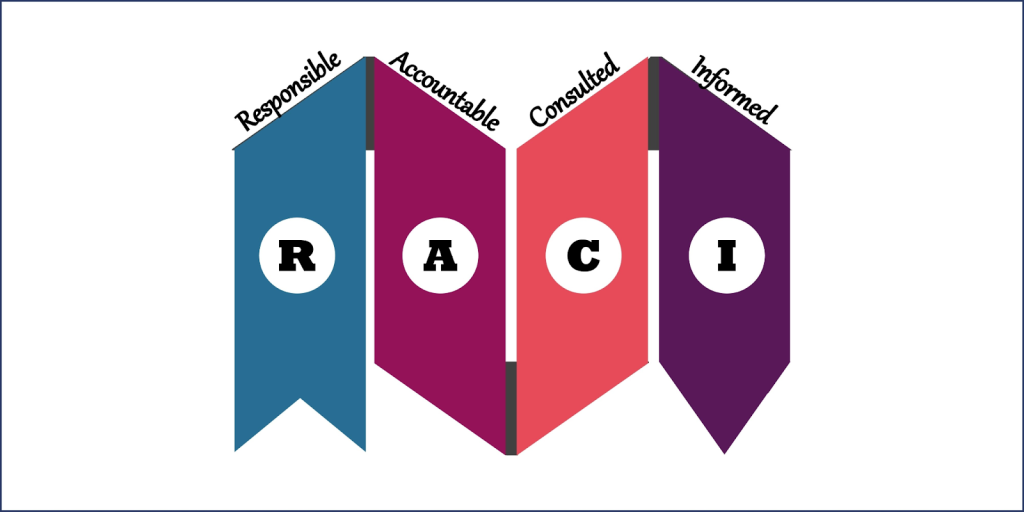
The RACI matrix stops the “Who’s on First?” chaos that kills timelines.
For every major task or decision, you define:
Responsible: The one who does the work.
Accountable: The one who has the final sign-off authority. (Only one per task).
Consulted: Those who provide input before a decision is made (two-way communication).
Informed: Those who are notified of the decision after it’s made (one-way communication)
It eliminates the leakage caused by misaligned ownership and approval bottlenecks.
The power isn’t in memorizing these definitions. The power is in forcing uncomfortable conversations before work starts. Who actually has authority here? Who needs to weigh in? Who just needs a heads-up?
Most teams skip this because it feels like paperwork. Then they waste months building something the wrong person approves.
A manufacturing company spent six months building a major campaign launch. The marketing team expedited timelines, coordinated across departments, and aligned budgets. They thought they were weeks from launch.
Then a divisional leader in a key region saw the final package and killed it. Not because the work was bad, but because it completely missed critical nuances about his local market. Nuances he would have flagged on day one if anyone had asked him.
The problem? He was never included in the RACI. The team didn’t know he needed to be consulted. They thought they were moving fast by keeping approvals tight. Instead, they built the wrong thing for six months.
A simple RACI matrix would have identified him as a stakeholder in week one. The team would have gathered his input early, adjusted the strategy, and launched on time.
How to Build AI Checklists for Marketing in Under 10 Minutes
Creating comprehensive checklists for marketing projects used to take hours. Now you can build them in minutes using AI and the right structure.
In our previous blog post, we wrote about using the CRIT framework (Context, Role, Interview, Task) to get smart, specific output instead of generic lists.
Step 1: Choose Your AI Tool
Open ChatGPT, Claude, Notion AI, or Asana Intelligence. Start a new chat titled “Marketing Project Checklist Builder” to keep everything organized.
Step 2: Give AI Project Context
Tell it what you’re building: “Create a marketing project management checklist for a mid-sized company running a brand refresh. Include pre-project, during-project, and post-project steps.”
Step 3: Add Your Leadership Philosophy
This is where it gets strategic. Add: “Include steps that help teams identify broken processes or missing information before work starts.”
Now the AI thinks like a leader who prevents problems, not just tracks them.
Step 4: Ask for Risk Identification
Marketing projects stall for predictable reasons. Add: “Include a section called ‘Possible Risks’ that lists the top issues that cause delays in marketing projects.”
This builds awareness right into the checklist.
Step 5: Refine to Essentials Only
Once AI gives you the first version, tighten it: “Shorten this to essential steps only. Remove anything that doesn’t reduce risk, increase clarity, or improve execution speed.”
You want a guide for action, not another burden.
Step 6: Save and Templatize
Copy the final version into your shared workspace. Label it clearly: “Your Company Pre-Project Checklist v1.0.”
For your next similar project, update it with a simple prompt: “Update this checklist for a product launch.”
This takes a total time of 5 to 10 minutes. You can build project-ready guardrails faster than scheduling a meeting.
What is the next step your marketing team should take this week
Stop reacting to delays and start preventing them.
Firstly, pick one active project. Create a Scope Document for it, even retroactively. Write down what’s in scope and what’s explicitly out of scope. Get stakeholder sign-off.
After, build a RACI matrix for that same project. Identify who’s actually “Accountable” for final approval.
Hint: it should be one person, not a committee.
Lastly, use the 6-step AI process to create a pre-launch checklist for your next project. Time yourself; it should take under 10 minutes.
After following the steps, you’ll have working templates you can reuse for every project going forward.
Here’s What Matters;
Marketing project management isn’t about better task tracking. It’s about preventing chaos before work starts.
The Scope Document permits you to say no to expansion. The RACI matrix clarifies who decides what. AI checklists help you build these guardrails in minutes instead of hours.
These aren’t administrative tasks. They’re your defense against wasted months, burned-out teams, and projects that get killed after you’ve already done the work.
Stop fighting fires. Download my scope template and RACI template we use with Fortune 500 marketing teams, which includes:
Scope Document Template – Lock down boundaries before work starts
RACI Matrix Template – Clarify ownership and approvals
AI Checklist Builder Guide – Create custom checklists in 10 minutes
BONUS: Task Prioritization Toolkit – Decide which projects deserve these templates
Ready to stop scope creep and approval chaos from derailing your best ideas?
Download the exact Scope Document and RACI Templates we use at The Digg Agency to implement these guardrails immediately.
Need help implementing these? www.thediggagency.com/contact-us/